
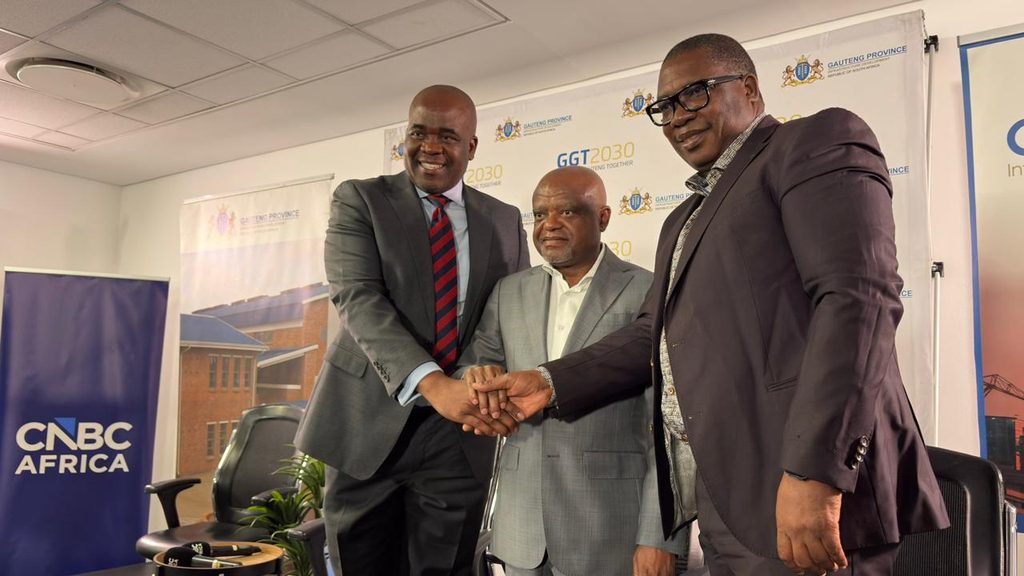
The Gauteng Provincial Government has entered into a Memorandum of Agreement (MOA) with the Development Bank of Southern Africa (DBSA) to accelerate the revitalisation of the Johannesburg Central Business District (CBD) and unlock investment opportunities aimed at restoring the inner city’s position as a major economic hub.
The partnership was unveiled on Wednesday 21 October during the CEO Breakfast hosted by the Gauteng Department of Infrastructure Development (DID), in partnership with CNBC Africa. At the centre of the agreement is the implementation of the Gauteng Precinct Development Project (GPDP), previously known as the Kopanong Precinct Project, which seeks to transform government-owned properties into a modern, integrated precinct that supports economic activity, improves public infrastructure and enhances the delivery of government services.
The project will be implemented through a partnership between the Gauteng Provincial Government, represented by the Gauteng Infrastructure Funding Agency (GIFA), and the Development Bank Southern Africa (DBSA). The initiative forms part of the broader Johannesburg CBD Revitalisation Programme, which seeks to address urban decay through the refurbishment and redevelopment of existing buildings, improvements to public infrastructure, and the mobilisation of private sector investment.
On behalf of the provincial government, Premier Panyaza Lesufi signed a pledge committing to implementing the revitalization of the CBD together with City of Joburg Executive Mayor Councillor Dada Morero and DBSA.
In his address Premier Lesufi said the “Real Johannesburg must rise” and that the legacy of the city cannot be abandoned. “I want to thank the team for bringing a strong partner, and I thank the City of Johannesburg for agreeing to be part of this important project”.
Gauteng MEC for Infrastructure Development, Jacob Mamabolo, said the agreement represents an important step towards translating the government’s plans for the regeneration of Johannesburg into tangible investment and infrastructure development.
“The revitalisation of Johannesburg’s CBD requires more than government intervention alone. It requires a coordinated approach that brings together the resources, expertise and investment capacity of both the public and private sectors.
Through this partnership with the DBSA, we are putting in place the institutional arrangements necessary to unlock the economic potential of government properties and attract investment into the inner city,” said MEC Mamabolo.
The programme is underpinned by the Gauteng Provincial Government’s Property Optimisation Strategy, which seeks to reposition government-owned immovable assets as strategic instruments for economic development, revenue generation and improved service delivery.
Through this strategy, the Department intends to maximise the economic value of its property portfolio by commercialising underutilised assets, reducing property holding costs and promoting sustainable, multi-purpose developments.
The revitalisation programme will also support ongoing interventions by the City of Johannesburg to address unsafe and hijacked buildings, improve public safety, upgrade infrastructure and restore basic municipal services, including electricity, waste management and the maintenance of public spaces. MEC Mamabolo emphasised that the success of the programme would depend on the ability of government to create an enabling environment for investment.
“Our objective is to restore investor confidence in Johannesburg’s inner city by demonstrating that government is prepared to lead, coordinate and facilitate development. We want to see government properties becoming productive economic assets that attract businesses, create employment opportunities and contribute towards the long-term sustainability of the city,” he said.
The Gauteng Provincial Government will continue working with the City of Johannesburg, the DBSA, financial institutions, property owners and other development partners to identify bankable projects, mobilise funding and accelerate the implementation of the CBD Revitalisation Programme.
The partnership is expected to contribute towards the provincial government’s broader objective of building smart, sustainable and economically competitive cities.