



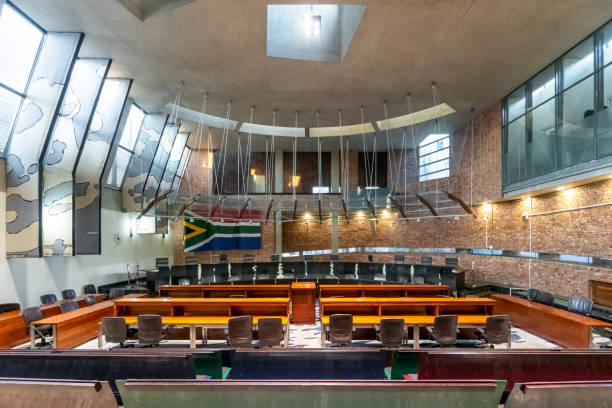
Johannesburg — The Constitutional Court of South Africa has ruled that the South African Human Rights Commission (SAHRC) does not have the authority to issue binding directives following its investigations into human rights violations.
In a unanimous judgment handed down on 22 April 2026, the apex court dismissed an appeal by the SAHRC in its case against Agro Data CC and an individual respondent. The matter centred on whether the Commission’s directives — issued after probing alleged rights violations — could be legally enforced without court intervention.
The case originated from a 2018 complaint by residents of Doornhoek farm in Mpumalanga, who alleged that their access to borehole water had been restricted. Following an investigation, the SAHRC found that their rights to water and dignity had been infringed and issued directives requiring restoration of access, disclosure of information, and engagement between the parties.
When the respondents failed to comply, the Commission approached the courts seeking confirmation that its directives were binding.
The SAHRC argued that its powers should be interpreted broadly under the Constitution, drawing parallels with the authority of the Public Protector as established in the landmark Economic Freedom Fighters v Speaker of the National Assembly judgment, where remedial actions were found to have binding effect in certain circumstances.
However, the Constitutional Court rejected this argument, drawing a clear distinction between the roles and powers of the two institutions.
The court found that while the Public Protector is empowered to take “remedial action” that may be binding, the SAHRC’s mandate is limited to “taking steps to secure appropriate redress.” This, the court held, does not extend to issuing directives with binding legal force.
“The wording of the Constitution and the SAHRC Act does not support an interpretation that the Commission has the power to issue binding directives,” the court found.
Importantly, the judgment emphasised that this limitation does not diminish the Commission’s constitutional role. Instead, the SAHRC remains a key institution in promoting human rights through investigation, advocacy, and facilitating access to justice.
The ruling effectively means that while the SAHRC can investigate complaints and make findings, it must rely on the courts or other appropriate legal mechanisms to enforce compliance.
Legal analysts say the judgment clarifies the scope of the Commission’s powers and reinforces the separation of roles among Chapter 9 institutions.
The decision is expected to have wide-ranging implications for how the SAHRC pursues enforcement of its findings in future cases, particularly in matters involving socio-economic rights such as access to water.Despite the setback, the Commission’s broader mandate to protect and promote human rights remains intact, with the court underscoring its continued importance in South Africa’s constitutional democracy.